
Nov
Vaping 101 Guides
What Are the Negative Effects of Vaping? Facts From the CDC and FDA
The negative effects of vaping start with nicotine, which is highly addictive. Vape aerosol can also carry harmful substances, e-liquid can poison children, and faulty batteries can start fires. We sell vape products. So we built this guide only from U.S. government sources, such as the CDC and FDA, and we link each one. It covers nicotine addiction, what’s in the aerosol and nicotine poisoning. It also covers vape battery safety and the side effects of vaping you should report.
Updated October 10, 2026
The short version
- Nicotine is highly addictive, and young people can show signs of nicotine addiction quickly.
- Vape aerosol is not harmless water vapor. It can contain heavy metals, fine particles and flavorings such as diacetyl.
- E-liquid can cause nicotine poisoning, most often in young kids, so store it up high, closed and out of sight.
- Faulty batteries have caused fires and explosions, mostly while charging.
- Vaping is not safe during pregnancy, and youth and young adults should not vape.
- Scientists are still learning about the long-term effects.
What are the negative effects of vaping?
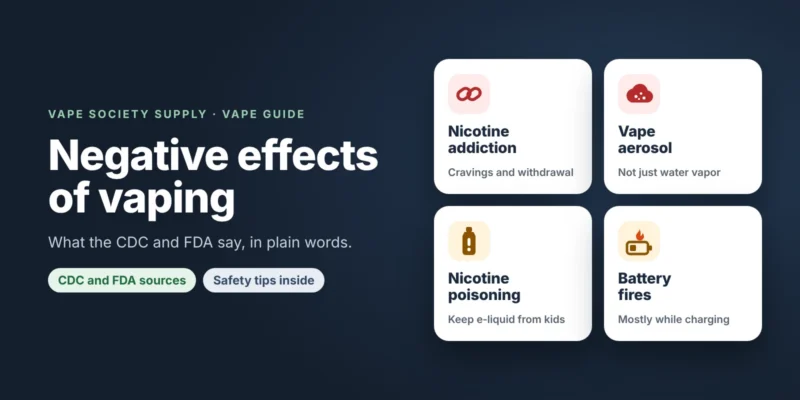
Here are the main negative effects of vaping that U.S. health agencies point to. Each one has its own section below, with a link to the source.
Highly addictive. It can also harm brain development, which goes on until about age 25.
Not just water vapor. It can carry heavy metals, fine particles and flavorings like diacetyl.
Can poison children and adults if it’s swallowed, breathed in or absorbed through skin or eyes.
Faulty batteries have caused fires and explosions, mostly while charging.
Not safe. Nicotine can harm a growing baby’s brain and lungs.
Still being studied, so the full picture isn’t known yet.
Nicotine addiction
Most vape juice contains nicotine, so addiction is one of the main risks of vaping. According to the FDA, nicotine is a highly addictive chemical. It can change the way the brain works and cause cravings for more. That’s why nicotine vape products must carry this federal warning: “This product contains nicotine. Nicotine is an addictive chemical.”
The CDC lists the signs of nicotine addiction as cravings, not being able to stop, and needing more to get the same effect. Also, people with nicotine addiction who stop may go through withdrawal. They may feel irritable, restless or anxious, have trouble sleeping or focusing, or feel hungry and crave nicotine. These symptoms fade over time as the brain gets used to not having nicotine. The CDC also notes that nicotine addiction can harm mental health and be a source of stress.
Age matters too. Nicotine can harm brain development, which continues until about age 25. In fact, the CDC notes that young people can show signs of nicotine addiction quickly, sometimes before they vape every day.
Nicotine strength also varies a lot. For example, nic salts often come in 20mg to 50mg, while sub-ohm freebase juice usually comes in 3mg or 6mg. Our freebase vs salt nicotine guide explains how the strengths compare.
What’s in vape aerosol
The CDC says vape aerosol is not harmless “water vapor”. Instead, it can contain:
- Nicotine.
- Tiny particles that can be breathed deep into the lungs.
- Flavorings such as diacetyl, a chemical linked to a serious lung disease.
- Volatile organic compounds.
- Cancer-causing chemicals.
- Heavy metals such as nickel, tin and lead.
E-liquid is mostly PG and VG, plus flavorings and, in most cases, nicotine. Our guide to PG and VG explains what each one does.
Too much nicotine and nicotine poisoning
Some side effects of vaping come from getting too much nicotine. Nicotine poisoning can happen when someone swallows e-liquid, breathes it in or absorbs it through the skin or eyes. According to MedlinePlus, from the U.S. National Library of Medicine, signs can include:
- Vomiting and stomach cramps.
- Headache and weakness.
- Feeling agitated, restless or confused.
- A fast, pounding heartbeat.
- Trouble breathing, seizures or fainting.
So what should you do? MedlinePlus says to get medical help right away, so call 911 or Poison Help at 1-800-222-1222. Poison Help is free, private and open 24/7. You can also call it with questions, since it doesn’t need to be an emergency. However, don’t make the person throw up unless Poison Control or a doctor tells you to.
Vaping risks for kids and pets
E-liquid poisoning is one of the risks of vaping that can reach kids at home. The CDC reports that more than 80% of calls to U.S. poison control centers about vapes are for children under 5. The FDA also warns that nicotine poisoning from swallowed e-liquid can cause seizures, coma and even death. Here are its tips for storing e-liquids safely:
- Keep vapes and e-liquids up high, in their original bottles, out of the reach and sight of kids and pets.
- Lock the caps when you’re not using them.
- Tell kids that only adults should handle these products.
- Store guests’ bags or coats that hold vapes the same way.
- Wash e-liquid off skin with soap and water. For eyes, rinse well with water.
- If a child swallows e-liquid, call Poison Control at 1-800-222-1222 right away, even if you’re not sure.
By federal law, liquid nicotine has to come in child-resistant packaging. Still, the CPSC says to keep it in that original bottle, locked up and out of a child’s sight and reach.
Vape battery safety
Battery fires are another risk of vaping, which is why vape battery safety matters. The CDC says defective vape batteries have caused fires and explosions, some with serious injuries. Most happened while the batteries were charging. These are the FDA’s tips for vape battery safety:
- Only use the batteries your device calls for. Also, don’t mix brands, charge levels, or old and new batteries.
- Charge on a clean, flat surface where you can see it, away from anything that can catch fire. A couch or pillow is a bad spot.
- Don’t charge your vape with a phone or tablet charger, and don’t charge it overnight.
- Keep your vape out of extreme heat and cold, such as a car on a hot day.
- Replace batteries that get damaged or wet.
- Store loose batteries in a case, away from metal objects like keys.
- Don’t vape around flammable gases or liquids, such as oxygen, propane or gasoline.
Use a box mod with removable batteries? Our sub-ohm vaping guide has more on vape battery safety for high-power devices.
Lung injury from THC vapes (EVALI)
In 2019 and early 2020, the CDC tracked an outbreak of serious lung injuries called EVALI. Of the hospital patients who shared what they used, 82% reported a THC product and 57% reported a nicotine product. Many used both. The CDC found that vitamin E acetate, an additive in some THC vaping products, was strongly linked to the outbreak.
So the CDC’s advice is clear. First, don’t use THC vaping products, especially from informal sources like friends, family or dealers. Second, never add anything to a vape product that its maker didn’t intend.
Vaping and pregnancy
The negative effects of vaping can reach a growing baby, too. The CDC says using any tobacco product, including e-cigarettes, is not safe during pregnancy. That’s because nicotine is toxic to a growing baby and can damage its brain and lungs. Also, vaping during pregnancy has been linked to low birth weight and preterm birth. If you’re pregnant or trying to be, talk to your doctor.
Side effects of vaping to report to the FDA
Some side effects of vaping are worth reporting. In fact, the FDA collects reports of health and safety problems with vapes through its Safety Reporting Portal. Its reporting guide lists problems such as:
- Any new or worse symptom or illness.
- Breathing trouble or chest pain.
- Burns, seizures, allergic reactions or poisonings.
- Harm to children, pets or people who don’t vape.
- Batteries that overheat, catch fire or explode.
- Leaks, damage or other defects.
For a battery problem, the FDA asks for the device’s brand, model and serial number. It also asks for the battery’s brand and model, and where you bought it. Most of all, see a doctor about any side effects of vaping.
Long-term effects of vaping
Vapes are still fairly new, so research on the negative effects of vaping is still catching up. The CDC says scientists still have a lot to learn about the short- and long-term health effects of vaping. As a result, no one can list every effect yet.
Who shouldn’t vape
The CDC says vapes should not be used by youth, young adults or pregnant women. Also, adults who don’t use tobacco products now shouldn’t start. In the U.S., you must be 21 or older to buy any tobacco product, including vapes, under the federal Tobacco 21 law.
Negative effects of vaping FAQ
Is vaping bad for you?
Vaping has real risks. The CDC says nicotine is highly addictive, and nicotine addiction can harm mental health. Vape aerosol can also carry harmful substances such as heavy metals and some flavorings. Also, scientists are still studying the negative effects of vaping over the long term.
What are the side effects of vaping?
The side effects of vaping that the FDA asks people to report include breathing trouble, chest pain, allergic reactions, burns and poisonings. In addition, too much nicotine can cause vomiting, headache, weakness or a racing heartbeat.
Can you get nicotine poisoning from vaping?
Yes. Nicotine poisoning can happen when someone swallows e-liquid, breathes it in or gets it on the skin or eyes. For help right away, call 911 or Poison Help at 1-800-222-1222.
What should I do if my child swallows e-liquid?
Call Poison Control at 1-800-222-1222 right away, even if you’re not sure. In an emergency, call 911. However, don’t make your child throw up unless Poison Control or a doctor tells you to.
Is it safe to vape while pregnant?
No. The CDC says using any tobacco product, including vapes, is not safe during pregnancy. Nicotine can harm a growing baby’s brain and lungs.
Can a vape battery explode?
Yes. Defective batteries have caused fires and explosions, and most happened during charging. So for vape battery safety, use the batteries your device calls for, skip phone chargers and overnight charging, and carry spares in a case.
Are the long-term effects of vaping known?
Not yet. The CDC says scientists still have a lot to learn about the short- and long-term health effects of vaping.
Have a question about a product?
Our team can help with device specs, batteries and nicotine strengths. For health questions, please talk to your doctor.
This guide shares general facts from U.S. government sources. It is not medical advice. If you have a health concern, talk to a doctor. For poisoning questions, call Poison Help at 1-800-222-1222. Vape products may contain nicotine, which is addictive, and are for adults 21 and older.
Lately iv been hearing rumors about vaping that it causes popcorn lung.
A term i researched. Also known As BO. Could vaping cause that. Because iv been vaping for a year now and i quit smoking cigs.